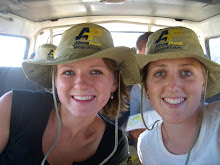
After spending a relaxing week on the Island of Crete, both Alison and I were excited to head to Athens, Greece. This was our third trip to Athens but this time we had plans to stay for a few days and explore the city. Most people we had spoken to about Athens had very little compliments about it but none of this mattered because we were overjoyed about picking up our dear friend Melissa from the airport. While we were still in Istanbul we called Melissa to say hello and chat, well during our conversation I got the idea to suggest she come out and visit for a week or so. I quickly looked up flights and the price was good so I told her it would be a blast if she wanted to join us for the last leg of our trip in Greece. Three days after we spoke she sent us an email saying she bought her ticket and was flying out to meet us. Well the time had come and Alison and I went to the Athens airport and waited for her arrival.
Melissa arrived on the Greek Orthodox Good Friday and for the following three days we toured around Athens and took part in the Easter festivities. For most of you, you celebrated Easter the weekend before but for the Greek Orthodox they celebrate lent for 55 days verses the standard 40 that we acknowledge, so Easter happened to follow exactly a week later this year. For the Greeks, Easter is the most important holiday because it means Christ has risen. On the evening of Melissa’s arrival the people of Athens gathered together in Syntagma square and held a moving candle light procession through the streets of Athens. This similar event happens at around 11pm the following night, the night before Easter Day. Everyone heads to the Resurrection Mass and at midnight all lights are turned off to symbolize Christ’s passing and then within a few short minutes the candles are lit and Christ is resurrected. People spiral out into the streets, candles in hand, fireworks are set off and everyone returns home and enjoys a feast of Easter cooking’s and Greek dancing.
Aside from taking part in the Greek Easter festivities we did a small bit of sightseeing. Most things were closed do to the holidays but we did happen to make it to the Acropolis and the National Archeological Museum. If there is one thing we noticed about Greece it is a walking archaeological country. Everywhere you go there are ruins to walk through and archaeological museums to visit. A bit of history about Athens, it received its name from the Greek goddess Athena, whom planted an olive tree which symbolizes peace and prosperity. The Acropolis was built as a thank you to Athena and was inhabited till the late 6th centaury BC. The Acropolis has suffered a great deal of destruction by human actions as well as natural causes. Never the less, the Acropolis is regarded as Greece’s masterwork of classical Greek architecture and I would agree. Walking through we were taken back by the views from which we could see. The Acropolis is located at the top of this hill which is roughly in the center of Athens and all around the grounds we could see the big city of Athens below. The Acropolis consists of two theaters, Propylaia, Temple of Athena, Parthenon, Erechtheion and a few statues. Our favorite, as well as most others is the Parthenon, probably do to its grandness. It is architecturally constructed of 8 columns at either end and 17 on each side. The detail, shape and height of this temple just takes your breath away and makes you blink twice, it is definitely a site to see.
With the holidays over and only a few days left we spent our last few days on Santorini Island. Santorini is known for two things, its beautiful sunsets and its whitewashed homes, both of which we were able to see. Instead of staying in the capital we opted to stay in a town called Perissa which was right by the beach. For our first day we spent the afternoon lying out on the black beach, relaxing and enjoying the sun. It ended up being a good thing because the remaining days were windy and cloudy. We had booked an all day tour to visit the volcanic island Nea Kameni, swim in the hot springs and have lunch on Therasia Island, but due to extreme wind the tour was cancelled, so instead we rented a car and drove around the very small island. When I say small I mean it, it takes less then one hour to get from one end of the island to the other. We took the car around stopping at several wineries, towns and beaches. Since the three of us are big wine drinkers, we wine tasted at a few wineries but in all honesty wine is not Greece’s specialty, the wine was average (this is me being nice). Although the wine was average we still enjoyed ourselves. In between the wineries we stopped in Fira the capital and strolled through the whitewash streets, enjoyed a frappe (iced coffee), satisfied our tummies with a Gyro and then continued on our way to Oia. Oia is another big city but most popularly known for its sunsets. We drove down to the port and sat on the ledge where we watched the sun go down. Sadly it was a bit cloudy so we did not get to see the beautiful rays of orange, red and yellow which most sunsets have on a clear day. Unsatisfied by the sunset we drove back the following evening hoping it would be better, which it was but still not postcard perfect, oh well maybe next time.
With the wind gone by the next day we were able to make the tour. Our fist stop was to Nea Kameni volcano where we were given an explanation as to how Santornini Island was formed. Like most islands Santorini was formed do to volcanic rock. Nea Kameni is currently dormant but scientist say that lava still sits inside the volcano and the way they know this is the various hot springs that spill out by the shore side. After our hike down the volcano, the boat took us to one of the hot springs where a handful of people jumped in and swam around for a bit in the warm water. Us being slightly unprepared, partially do to thinking we were going to a hot springs facility we did not have our swim suits on and therefore did not go in. Although we could have changed on the boat, we were to lazy and plus we would have been freezing once we got out of the water so all together it did not look so appealing. Hungry and ready for lunch, we arrived at our third and final stop which was Thirasia Island. Thirasia was once joined to Santorini but during a volcanic eruption in 236 BC it separated and is now a queit little island. It’s much smaller than Santorini and there are just a few people who live on this island. After climbing several steps we reached the top where we sat over the cliff and had ourselves a nice picnic lunch.
For our last and final day on Santorini we took the car and drove around the island stopping at red beach and Boutari Wineries. We had passed this winery on the first day but opted to skip it for one reason or another. Well we passed by it again and thought to stop in and do one more wine tasting before we leave. It ended up being the best decision ever because the wine was good and this unlike the others resembled a proper winery. They had a list of all their wines; we were able to choose from roughly six wine tasting packages and were served by a knowledgeable employee. We spent a little over an hour there and walked out with four wine bottles. If I were to ever return to Santorini I would definitely stop in again and skip the rest. With a little wine in our tummies and wine in our hands we were ready to board our eight hour ferry back to Athens.
Good bye Greece, good bye friends, hello Eastern Europe!!!
Showing posts with label Greece. Show all posts
Showing posts with label Greece. Show all posts
Thursday, April 30, 2009

Monday, April 20, 2009
Crete (Never Neverland)
Our week in Crete was the prefect balance of sight seeing and beach relaxation. After confusion at a train station in the Peloponnese region of Greece, which resulted in a mix-up of our final destination, we ended up back in Athens. We decided not to waste money backtracking and instead to head to the port to check out the ferry times to different islands. The Crete ferry was leaving in an hour and half, so we chose that ferry. We had planned on going to Crete a little later in our travels, but it turned out to be a wonderful experience and we couldn't have planned it better if we had actually tried!
Crete is the largest island in Greece, as well as being the most southern point in all of Europe. Our overnight ferry took us to the port in the town of Iraklion, which is located in the central region of the island. The first thing you notice when you get off the ferry is the massive city walls which border the island. The walls are 15m thick and were used to protect the island from being attacked. The walls, along with the Venetian fortress, withstood a 22-year siege, before finally falling to the Ottomans. Toriann and I spent a good amount of time at the fortress exploring and taking in the beautiful scenery of the Mediterranean Sea. Part of Crete's history also includes being under Turkish rule for a period, and during this time they built a minaret, where the call of prayer was sent out from. Today, the minaret is the only standing evidence in the fortress or the town that it was ever had any Islamic influence. After our time in the fortress, we spent the remainder of the first day in Iraklion walking through the small streets lined with shops and cafes filled with people. We made an observation that no matter what time or day of the week there were always locals sitting in cafes drinking frappes. We are not sure where or when anyone works in the country of Greece! We made our way back to the center of the city where there Platia Venizelou (Lion Fountain) is located. This fountain became our favorite place to sit and enjoy food while people watching.
Our second day in Iraklion we went to the much talked about Knossos, the largest Minoan palace. Knossos is the second most visited place in Greece after the Acropolis. Knossos dates back to as early as 7th millennium BC and perhaps even earlier. Over a century ago Knossos only existed in mythology, being the legendary sight of King Minos. When the palace was discovered in the late 1800’s it was seen as one of the most amazing tales of modern archeology. Sir Arthur Evans completed the excavation of Knossos in the early 1900’s and even recreated part of Knossos himself. Evans self recreation of the Palace has been a debate by fellow archeologist to this day. The reconstructions are identified by being painted bold colors amongst the natural colors of the ruins. We felt these colored columns took away from authenticity of the rest of the ruins. Even the frescos were removed and replaced with replicas of the original. Despite Evans’s reconstruction of the Palace, it is still an impressive 1,500 room Minoan palace located on top of a hill.
After the palace we were trying to decide if we should go wine tasting or to the aquarium, so we let the bus make our choice, whichever bus came first we would go there. The aquarium bus came first and it turned out to be the highlight of Iraklion! The aquarium had a wide assortment of colorful fish and we spent hours learning all the names of the fish. Toriann’s knowledge of fish and sea creatures has grown from all her diving experiences on the trip and this gave her an excellent chance to show off her new knowledge. It also gave me a chance to hear more details of some of her and Heather’s diving experiences. The highlight of the aquarium was the seahorse exhibit, where they showed a video of male seahorses giving birth. The seahorse looks as though it is sneezing and then 1000’s of baby seahorses come out of him. This repeats several times and it is one of the funniest things we have ever seen, it made Toriann and I laugh for days afterwards.
While in Iraklion we met a girl who had just arrived from a little town in southern Crete called Plakias, who said we HAD to go there. We had read about in our book, but it seemed like it was going to cost too much to go there and back, so we decided against it. Well, after spending a few hours talking with our new friend, we decided to check out of our hostel a night earlier than expected and head down to the town of Plakias. The first person we encountered off the bus in Plakias assured us we would never want to leave this town and after a few hours there we started to understand what the man was talking about! The town is right on the water and the population includes locals and people from all over the world who have come to Plakias once and decided to move there forever. We nicknamed it Never Neverland, because it seemed like no one had any responsibilities and no one ever grew up. I can say without a doubt that it was the most idyllic, beautiful town I have ever spent time in. Toriann and I spent most of our days resting on the beach working on our tans and eating Greek food, our favorite being grilled feta. We met some great people at the hostel who we spent our evenings with at the local restaurants and of course Joe's Bar, where we learned traditional Greek dancing.
Toriann and I decided one of our days had to consist of something else rather than simply lying on the beach. A group of people from the hostel who had cars were going to a nearby village to do a little exploring and Toriann decided to join them. They walked around the village and saw the oldest tree in Crete. I thought it would be nice to experience one of the many hikes that Plakias had to offer and opted to decline the car trip to the village to go on a hike. I ended up getting in a little over my head with the hike. I was told it was a two hour hike each way to the top of this mountain, which seemed easy enough. Well the hike was definitely not like the hikes I take in Seattle where there are clear paths and other hikers. It turned out to be an 8 hour adventure and involved very minimal trails and no other hikers in sight. The majority of the hike involved climbing up rocks, which is something I often get scared at doing. I had a great hiking partner who reassured me I could climb the rocks all the way to the top. However, about halfway up I realized I was going to have to climb down these rocks and had a small moment of panic. Again, my hiking partner reassured me I would be fine and thus we continued on. We finally made it to the top and the view was amazing! The way back down proved not to be as fearful as I had anticipated and minus our detour of not finding the road right away, the journey down went great.
We only had half of the next day available before we had to head to the bus to catch our ferry so we of course spent our last hours lying on the beach in what we now referred to as "our spot." After saying goodbye to Plakias we were on our way to Athens to pick up our friend Melissa from the airport to spend our final week in Greece together.
Crete is the largest island in Greece, as well as being the most southern point in all of Europe. Our overnight ferry took us to the port in the town of Iraklion, which is located in the central region of the island. The first thing you notice when you get off the ferry is the massive city walls which border the island. The walls are 15m thick and were used to protect the island from being attacked. The walls, along with the Venetian fortress, withstood a 22-year siege, before finally falling to the Ottomans. Toriann and I spent a good amount of time at the fortress exploring and taking in the beautiful scenery of the Mediterranean Sea. Part of Crete's history also includes being under Turkish rule for a period, and during this time they built a minaret, where the call of prayer was sent out from. Today, the minaret is the only standing evidence in the fortress or the town that it was ever had any Islamic influence. After our time in the fortress, we spent the remainder of the first day in Iraklion walking through the small streets lined with shops and cafes filled with people. We made an observation that no matter what time or day of the week there were always locals sitting in cafes drinking frappes. We are not sure where or when anyone works in the country of Greece! We made our way back to the center of the city where there Platia Venizelou (Lion Fountain) is located. This fountain became our favorite place to sit and enjoy food while people watching.
Our second day in Iraklion we went to the much talked about Knossos, the largest Minoan palace. Knossos is the second most visited place in Greece after the Acropolis. Knossos dates back to as early as 7th millennium BC and perhaps even earlier. Over a century ago Knossos only existed in mythology, being the legendary sight of King Minos. When the palace was discovered in the late 1800’s it was seen as one of the most amazing tales of modern archeology. Sir Arthur Evans completed the excavation of Knossos in the early 1900’s and even recreated part of Knossos himself. Evans self recreation of the Palace has been a debate by fellow archeologist to this day. The reconstructions are identified by being painted bold colors amongst the natural colors of the ruins. We felt these colored columns took away from authenticity of the rest of the ruins. Even the frescos were removed and replaced with replicas of the original. Despite Evans’s reconstruction of the Palace, it is still an impressive 1,500 room Minoan palace located on top of a hill.
After the palace we were trying to decide if we should go wine tasting or to the aquarium, so we let the bus make our choice, whichever bus came first we would go there. The aquarium bus came first and it turned out to be the highlight of Iraklion! The aquarium had a wide assortment of colorful fish and we spent hours learning all the names of the fish. Toriann’s knowledge of fish and sea creatures has grown from all her diving experiences on the trip and this gave her an excellent chance to show off her new knowledge. It also gave me a chance to hear more details of some of her and Heather’s diving experiences. The highlight of the aquarium was the seahorse exhibit, where they showed a video of male seahorses giving birth. The seahorse looks as though it is sneezing and then 1000’s of baby seahorses come out of him. This repeats several times and it is one of the funniest things we have ever seen, it made Toriann and I laugh for days afterwards.
While in Iraklion we met a girl who had just arrived from a little town in southern Crete called Plakias, who said we HAD to go there. We had read about in our book, but it seemed like it was going to cost too much to go there and back, so we decided against it. Well, after spending a few hours talking with our new friend, we decided to check out of our hostel a night earlier than expected and head down to the town of Plakias. The first person we encountered off the bus in Plakias assured us we would never want to leave this town and after a few hours there we started to understand what the man was talking about! The town is right on the water and the population includes locals and people from all over the world who have come to Plakias once and decided to move there forever. We nicknamed it Never Neverland, because it seemed like no one had any responsibilities and no one ever grew up. I can say without a doubt that it was the most idyllic, beautiful town I have ever spent time in. Toriann and I spent most of our days resting on the beach working on our tans and eating Greek food, our favorite being grilled feta. We met some great people at the hostel who we spent our evenings with at the local restaurants and of course Joe's Bar, where we learned traditional Greek dancing.
Toriann and I decided one of our days had to consist of something else rather than simply lying on the beach. A group of people from the hostel who had cars were going to a nearby village to do a little exploring and Toriann decided to join them. They walked around the village and saw the oldest tree in Crete. I thought it would be nice to experience one of the many hikes that Plakias had to offer and opted to decline the car trip to the village to go on a hike. I ended up getting in a little over my head with the hike. I was told it was a two hour hike each way to the top of this mountain, which seemed easy enough. Well the hike was definitely not like the hikes I take in Seattle where there are clear paths and other hikers. It turned out to be an 8 hour adventure and involved very minimal trails and no other hikers in sight. The majority of the hike involved climbing up rocks, which is something I often get scared at doing. I had a great hiking partner who reassured me I could climb the rocks all the way to the top. However, about halfway up I realized I was going to have to climb down these rocks and had a small moment of panic. Again, my hiking partner reassured me I would be fine and thus we continued on. We finally made it to the top and the view was amazing! The way back down proved not to be as fearful as I had anticipated and minus our detour of not finding the road right away, the journey down went great.
We only had half of the next day available before we had to head to the bus to catch our ferry so we of course spent our last hours lying on the beach in what we now referred to as "our spot." After saying goodbye to Plakias we were on our way to Athens to pick up our friend Melissa from the airport to spend our final week in Greece together.
Sunday, April 19, 2009
Thessaloniki, Meteora and More
Welcome to Greece, the birth place of Greek mythology, democracy, the Olympics and much much more. Alison and I safely arrived into Greece, via our overnight train from Istanbul to Thessaloniki. Knowing ahead of time that Thessaloniki is Greece's most expensive and metropolitan city we opted to stay for the day and then catch an evening train to Kalambanka. Thessaloniki is a big city but with a little pre-planning it can be seen in just a few short hours. First we needed to get our grounding and what better way to do that then following the LP's suggested walking tour. The walking tour had us start at the top of this hill where there is a castle and a viewing platform. As we gazed out over Thessaloniki we took in as much as possible knowing our time here was precious. Following the tour we stopped and admired the architecture of the churches, took pictures of old ruins, visited some national buildings and ended at Thessalonikis most beloved landmark, the White Tower. The irony of the White Tower is that it was actually covered in blood. In 1826 Ottoman Sultan Muhmad II ordered that all Islamicised Christian boys who were disloyal to Islam were to be massacred here. Once the Greeks regained power in 1913 they had the tower whitewashed as a way to cover up the dark memories of which occurred there. Taken back by this awful truth we sat by the water side and just took some time to reflect and relax our legs. After our rest we walked over to the port to have a look around and also visited the Thessaloniki Museum of Photography. The Museum was in between exhibitions so it wasn't completely filled of works but what we did see was great. The museum has decided to hold pieces for each of the four elements. The works will be up for a year and the one they were currently wraping up was on water. All of the pieces gave a unique perspective of water but one of our favorites was the over flowing kitchen sink. With a bit of time left we walked the streets a bit more and picked up some food and drinks to enjoy on our train ride.
Their is really only one reason for why people travel to Kalambanka and that is to visit Meteora. Meteora is this extraordinary place for its massive pinnacles of smooth rock and at the top sit these architecturally crafted monasteries. There are 24 monasteries which have been built at the top of these pinnacles but only 6 of them are currently active and can be visited. Of the six monasteries we saw five of them, walked past four and visited two. We would have liked to have seen all six but since we had only our two legs to get us around and visiting hours being limited we simply couldn't manage doing it all. The two monasteries we did visit are called Moni Megalou Meteorou and Moni Varlaam. The first one built on the highest rock, 613m above sea level, and was founded by St. Athanasios in the 14th century. The Moni has a 12 sided central dome and holds a series of frescoes depicting the persecutions of Christians by the Romans. The second one is near by and quite a bit smaller but had a small museum of late byzantine frescos. The views from these Monis is absolutely amazing and to think that they were built between the 11th and 14th century is just amazing. It is claimed that the monis were reached by climbing removable ladders, that's just crazy.
From Kalambaka we backtracked a bit to a town called Vergina so we could visit the Royal Tombs. Vergina is apparently the legendary burial site of the Macedonian kings and happens to be where Phillip II was assassinated during his daughter, Cleopatra's wedding. The Royal Tombs were not discovered until 1977, and inside lay four individual tombs. The two most famous tombs are the one of Phillip II and the second being of Alexander IV, son of Alexander the Great. It is believed that inside Phillip II's tomb also lay the skeleton of Cleopatra. Either way its grand to think that it could be possible. Aside from the possibility that maybe Cleopatra was buried here I was shocked at how preserved the tombs were. They still had such vibrant colors and the building structure is still in good form.
Content with our decision to backtrack, yet anxious to get to Peloponnese region we took a night train to Athens. Thinking we were going to have seats on the night train we thought traveling through the night would be a good way of not wasting time or money. Well the idea back fired once we boarded the fully packed train and then were told by the train conductor that we had no actual seat reservations. Exhausted and not mentally prepared to stand on a train for six hours, we coped quite well. Eager to find something to do to pass the time we thought why not engage in a broken English conversation with the Greek boys standing around us. The idea turned out to be entertaining and funny. There were five guys, four were on military holiday and the other one was originally from Albania but had moved to Greece for work. All of them were very nice and before we knew it we were in Athens. Well the time didn't quite pass that quickly but overall the train ride did go by and we survived the sleepless night of standing on a train. Once we arrived we decided it best to continue our travels and ride three more trains before we finally arrived in Olympia.
Exhausted from traveling, our first day or half of day in Olympia was spent sleeping and recovering. The town is very touristy yet ironically lacked tourist especially backpackers, we were the only backpackers in our hostel. For our one and only full day we spent our time exploring the Museum of the Olympic Games, the Archeological Museum, and toured through Ancient Olympia. It was suggested by the handy dandy LP to first visit the museums so we could get a better visual of what Ancient Olympia looked like. The historical museum is probably one of the best museums we visited, it gave short but detailed information on how the Olympics began, the events which took place, and people who attended. One observation we both noticed and thought interesting was how not only currently but as well as then the games bring this unspoken peace treaty among every human being. After our visit we walked over to Ancient Olympia and toured through the archeological museum. There is very little information but displays several statues, part of the Temple of Zeus, and holds several pediments. Now that we had a good imaginative visual of Ancient Olympia we went and explored the Olympic grounds. Wow, was it amazing, one of the best things we have seen so far. With the lack of tourist we simply walked around visiting the sites and enjoyed the peace and quite. The first thing we saw was the gymnasium which was built inn 2nd century BC. Pheidias' workshop is where the Statue of Zeus was sculpted and is whom the games were held for but sadly it was destroyed like most everything here. In AD 426 Theodosius II decided to have the temples be destroyed for the games and festivals held here were considered pagan. Prior to him ruled Theodosius I in AD 394 and during his rule he simply put an end to the games and it is from this date to the year 1896 no Olympic games were held. Both of us were shocked to read how current the Olympic games were reinstated. As we continued walking the grounds we saw the Temple of Zeus where one of the columns was restored and re-erected for the Athens 2004 Olympic games. We sat in the stadium and envisioned the runners sprinting the 120m track. And the coolest thing we saw was Hera's Altar which is where the lighting of the Olympic flame takes place. The lighting signifies the official beginning of the games. Being there and seeing where the Olympics began gave me a new found appreciation for the games. The Olympic games is really the only time where people from all parts of the world come together in peace.
Their is really only one reason for why people travel to Kalambanka and that is to visit Meteora. Meteora is this extraordinary place for its massive pinnacles of smooth rock and at the top sit these architecturally crafted monasteries. There are 24 monasteries which have been built at the top of these pinnacles but only 6 of them are currently active and can be visited. Of the six monasteries we saw five of them, walked past four and visited two. We would have liked to have seen all six but since we had only our two legs to get us around and visiting hours being limited we simply couldn't manage doing it all. The two monasteries we did visit are called Moni Megalou Meteorou and Moni Varlaam. The first one built on the highest rock, 613m above sea level, and was founded by St. Athanasios in the 14th century. The Moni has a 12 sided central dome and holds a series of frescoes depicting the persecutions of Christians by the Romans. The second one is near by and quite a bit smaller but had a small museum of late byzantine frescos. The views from these Monis is absolutely amazing and to think that they were built between the 11th and 14th century is just amazing. It is claimed that the monis were reached by climbing removable ladders, that's just crazy.
From Kalambaka we backtracked a bit to a town called Vergina so we could visit the Royal Tombs. Vergina is apparently the legendary burial site of the Macedonian kings and happens to be where Phillip II was assassinated during his daughter, Cleopatra's wedding. The Royal Tombs were not discovered until 1977, and inside lay four individual tombs. The two most famous tombs are the one of Phillip II and the second being of Alexander IV, son of Alexander the Great. It is believed that inside Phillip II's tomb also lay the skeleton of Cleopatra. Either way its grand to think that it could be possible. Aside from the possibility that maybe Cleopatra was buried here I was shocked at how preserved the tombs were. They still had such vibrant colors and the building structure is still in good form.
Content with our decision to backtrack, yet anxious to get to Peloponnese region we took a night train to Athens. Thinking we were going to have seats on the night train we thought traveling through the night would be a good way of not wasting time or money. Well the idea back fired once we boarded the fully packed train and then were told by the train conductor that we had no actual seat reservations. Exhausted and not mentally prepared to stand on a train for six hours, we coped quite well. Eager to find something to do to pass the time we thought why not engage in a broken English conversation with the Greek boys standing around us. The idea turned out to be entertaining and funny. There were five guys, four were on military holiday and the other one was originally from Albania but had moved to Greece for work. All of them were very nice and before we knew it we were in Athens. Well the time didn't quite pass that quickly but overall the train ride did go by and we survived the sleepless night of standing on a train. Once we arrived we decided it best to continue our travels and ride three more trains before we finally arrived in Olympia.
Exhausted from traveling, our first day or half of day in Olympia was spent sleeping and recovering. The town is very touristy yet ironically lacked tourist especially backpackers, we were the only backpackers in our hostel. For our one and only full day we spent our time exploring the Museum of the Olympic Games, the Archeological Museum, and toured through Ancient Olympia. It was suggested by the handy dandy LP to first visit the museums so we could get a better visual of what Ancient Olympia looked like. The historical museum is probably one of the best museums we visited, it gave short but detailed information on how the Olympics began, the events which took place, and people who attended. One observation we both noticed and thought interesting was how not only currently but as well as then the games bring this unspoken peace treaty among every human being. After our visit we walked over to Ancient Olympia and toured through the archeological museum. There is very little information but displays several statues, part of the Temple of Zeus, and holds several pediments. Now that we had a good imaginative visual of Ancient Olympia we went and explored the Olympic grounds. Wow, was it amazing, one of the best things we have seen so far. With the lack of tourist we simply walked around visiting the sites and enjoyed the peace and quite. The first thing we saw was the gymnasium which was built inn 2nd century BC. Pheidias' workshop is where the Statue of Zeus was sculpted and is whom the games were held for but sadly it was destroyed like most everything here. In AD 426 Theodosius II decided to have the temples be destroyed for the games and festivals held here were considered pagan. Prior to him ruled Theodosius I in AD 394 and during his rule he simply put an end to the games and it is from this date to the year 1896 no Olympic games were held. Both of us were shocked to read how current the Olympic games were reinstated. As we continued walking the grounds we saw the Temple of Zeus where one of the columns was restored and re-erected for the Athens 2004 Olympic games. We sat in the stadium and envisioned the runners sprinting the 120m track. And the coolest thing we saw was Hera's Altar which is where the lighting of the Olympic flame takes place. The lighting signifies the official beginning of the games. Being there and seeing where the Olympics began gave me a new found appreciation for the games. The Olympic games is really the only time where people from all parts of the world come together in peace.
Subscribe to:
Posts (Atom)